

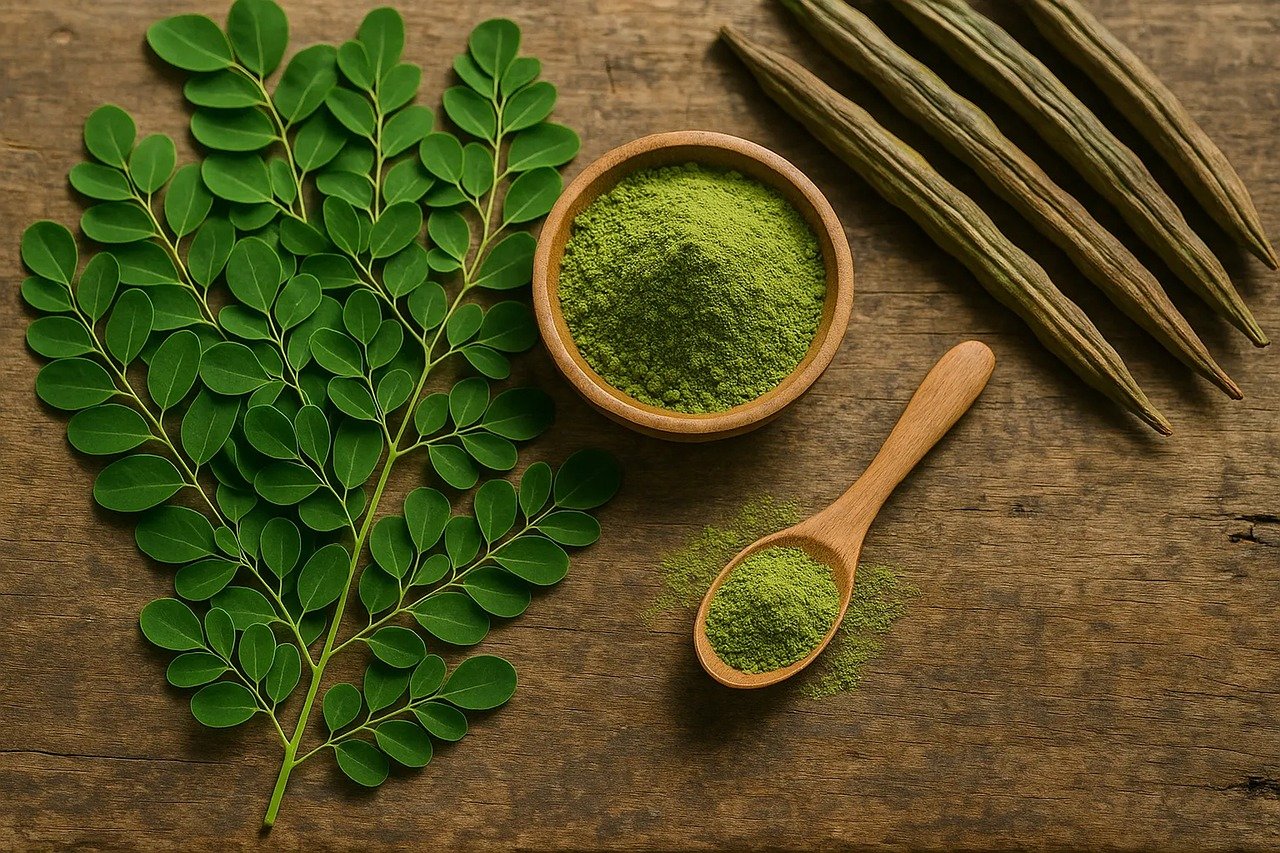
Moringa has been on Europe’s radar for around 15 years. It’s often introduced as a “superfood” — rich in vitamins, minerals and antioxidants — and increasingly appears not only in health products, but also in natural cosmetics, where moringa oil is valued for its fatty acid profile and antioxidant potential.
Yet for many buyers, the challenge has never been the story. It’s the sourcing.
Moringa can be exceptional — and still be inconsistent. It requires suitable climate conditions, careful cultivation, and, crucially, disciplined handling and processing. In other words: the distance between “high potential ingredient” and “repeatable, market-ready supply” is where sourcing decisions are won or lost.
That is exactly the gap the Centre for the Promotion of Imports from developing countries (CBI) is addressing through the Moringa Burkina Faso programme (2021–2026), led by Dr Andreas B. W. Wesselmann.
Why does moringa sourcing gets complicated?
Buyers tend to look for the same core assurances, regardless of category:
- Stable quality across lots and seasons
- Traceability and documentation that holds up to due diligence
- Compliance and certification aligned with the organic market
- A supplier relationship that can grow, not just transact
In moringa, those requirements are made harder by the ingredient’s sensitivity. Without strong post-harvest handling, drying, storage, and packaging, quality can degrade quickly. That is why many sourcing conversations stall not on price, but on whether the supplier can deliver consistently — and whether they understand what “market-ready” truly means in practice.
The CBI approach: building readiness, not just output
The CBI programme takes a structured approach to sector development. It doesn’t only aim to increase production; it works on the conditions that make supply dependable and commercially viable.
Key focus areas include:
1) Certification pathways for the organic market
For Europe’s organic segment, certification is not an “extra” — it’s the entry point. One of the programme’s central objectives is supporting participating companies as they progress on certification and market requirements, so buyers can engage with clearer compliance trajectories.
2) Quality systems that protect a sensitive ingredient
Because moringa is susceptible, the programme emphasises technical and practical training that improves quality outcomes — particularly around processing, drying, and consistency. This is the unglamorous part of supply chain development, but it is also the part that reduces risk for buyers.
3) Business maturity beyond the farm gate
The programme supports SMEs not only in how to grow, but how to run a sustainable business: packaging decisions, marketing fundamentals, internal organisation, human resources, and corporate social responsibility (CSR). For buyers, these elements often signal whether a supplier can communicate well, respond reliably, and scale responsibly.
4) Market diversification as a resilience strategy
Originally designed with export in mind, the programme has also expanded to consider local and regional markets. That matters because resilience is built on optionality: companies that can serve more than one market route tend to be more stable partners over time.
5) Inclusion and livelihoods within the value chain
Women are central in moringa production in Burkina Faso. Across the sector, women often make up a significant share of the workforce, with women-led enterprises also present. For buyers with responsible sourcing commitments, these realities matter — but only when backed by credible practices and transparent operations.
What long-term partnership unlocks for buyers
Long-term relationships create practical benefits that buyers can measure.
Rather than pushing production alone, the programme works on the foundations that reduce sourcing risk:
1) Market access with realistic pathways
The programme began with export as the central focus, and expanded to explore local and regional market routes as well — because resilience is stronger when companies are not dependent on a single channel.
2) Organic readiness and compliance culture
For Europe, organic certification is not a marketing line — it’s market access. Across the programme, certification progress is treated as essential, not optional.
3) Quality systems for a sensitive ingredient
Moringa’s susceptibility makes training and process discipline critical. Strong handling, drying, storage, microbiological awareness and packaging choices are what protect quality — and ultimately buyer confidence.
4) Business maturity beyond the farm gate
Packaging guidance, marketing readiness, HR and CSR aren’t peripheral. They’re signals of whether a supplier can manage a long-term relationship, grow responsibly, and communicate with buyers clearly.
Four companies to know
Founded in 2011, BIOPROTECT works with 4,000 smallholder farmers to promote organic agriculture with a clear link to land restoration and human health. Their model is grounded in training and relationship-building across the ecosystem — from technical support to service providers, financial institutions and buyers.
For buyers, BIOPROTECT is a useful example of “systems-first” supply: building the kind of structure that supports consistent quality, traceability, and reliability over time.
Buyer-relevant snapshot
- Supply base: 4,000 farmers across 2,889 ha
- Inclusion: 35% women farmers in the supply base; 65% women in the company team (29 staff)
- Stated volumes: sesame seeds ~500 t/year; moringa powder/dried leaves ~10 t/year
- Priorities: quality improvement, microbiological quality, packaging, and EU market alignment
Diamond Moringa reflects a newer wave of suppliers building towards export readiness with a clear moringa focus. In a category where quality can be lost quickly, specialisation matters — and the company’s trajectory sits squarely within the programme’s core aim: to strengthen capacity for consistent processing, better quality, and clearer buyer conversations.
For buyers, Diamond Moringa represents a supplier building around the fundamentals that make procurement easier: a defined offer, improved handling and processing practices, and a stronger understanding of what the market expects.
Buyer relevance: a moringa-focused supplier developing the consistency and commercial clarity buyers need for repeat orders and partnership building.
3) Zoé Industry
Zoé Industry’s portfolio points to where moringa sourcing is going: beyond bulk ingredients into market-ready formats. The company works across moringa powder and tea formats (alongside botanicals such as lemongrass and hibiscus), which can be attractive for buyers looking at both ingredient procurement and product-facing applications.
For buyers mapping future supply, Zoé is relevant because it sits at the intersection of processing capability and format diversity — useful for brands looking for more than commodity-grade supply.
Buyer relevance: a supplier profile aligned with moringa in consumer-ready formats and a broader processing approach.
4) ABASF/E (Association Burkinabè Action Solidarité Femmes/Enfants)
ABASF/E adds an essential dimension to the CBI-supported ecosystem: how value chains can strengthen livelihoods through structured local processing, while meeting the expectations of buyers who need credibility and consistency.
Rooted in women’s economic empowerment, ABASF/E’s model centres on organised production and income generation that supports community outcomes. For responsible buyers, that matters — but only when it is paired with operational clarity and quality discipline, which is exactly where programme support and market orientation become relevant.
In moringa, this is increasingly important as the category expands beyond powders and dried leaves. Buyers are looking for partners who can support value addition, repeatable processing, and credible social practices that stand up to due diligence.
Buyer relevance: a women-driven processing model aligned with responsible sourcing goals — particularly for buyers seeking suppliers that combine structured local value addition with long-term partnership potential.
What this means for your sourcing: fewer assumptions, clearer conversations
The most valuable outcome of programmes like this isn’t only increased supply — it’s clearer, more procurement-ready engagement. If you’re evaluating moringa suppliers, consider structuring conversations around:
- How quality is protected from harvest through drying, storage and packaging
- Microbiological quality approach and consistency controls
- Organic certification status and timeline (where still in progress)
- Traceability model and farmer engagement
- Current reliable volumes vs realistic growth plans
A practical next step for buyers
If you’re currently evaluating moringa supply — or planning to — the fastest way to make an initial conversation meaningful is to align early on the procurement basics. We can share a concise buyer brief for these companies, including:
- product formats available and typical use cases
- current certification status and timelines (where still in progress)
- indicative volumes, packaging options, and lead times
- documentation approach (traceability, quality controls, test parameters)
- the right contact route for samples and commercial discussions


0 Comments