

Over the past five years, Nigeria has been ranked among the top three ginger producers worldwide along India and China. Most of the ginger production in Nigeria grows in the Southern Kaduna belt, and it has been this way since ginger was introduced from its origin area in South-East Asia to Western Africa by the Portugues in the 16th century and its commercial production took hold in Nigeria about 100 years ago.
In 2023, however, the country’s yield dramatically dropped. A disease called Ginger Blight (fungal or bacterial wilt) spread like wildfire from seedling to seedling, land to land, dramatically affecting the livelihoods of the farmers who depend on ginger. We do not have precise figures on the yield loss yet, but it is estimated, as in September 2023, that, in this region, the losses were around N10bn according to Premium Times Nigeria.
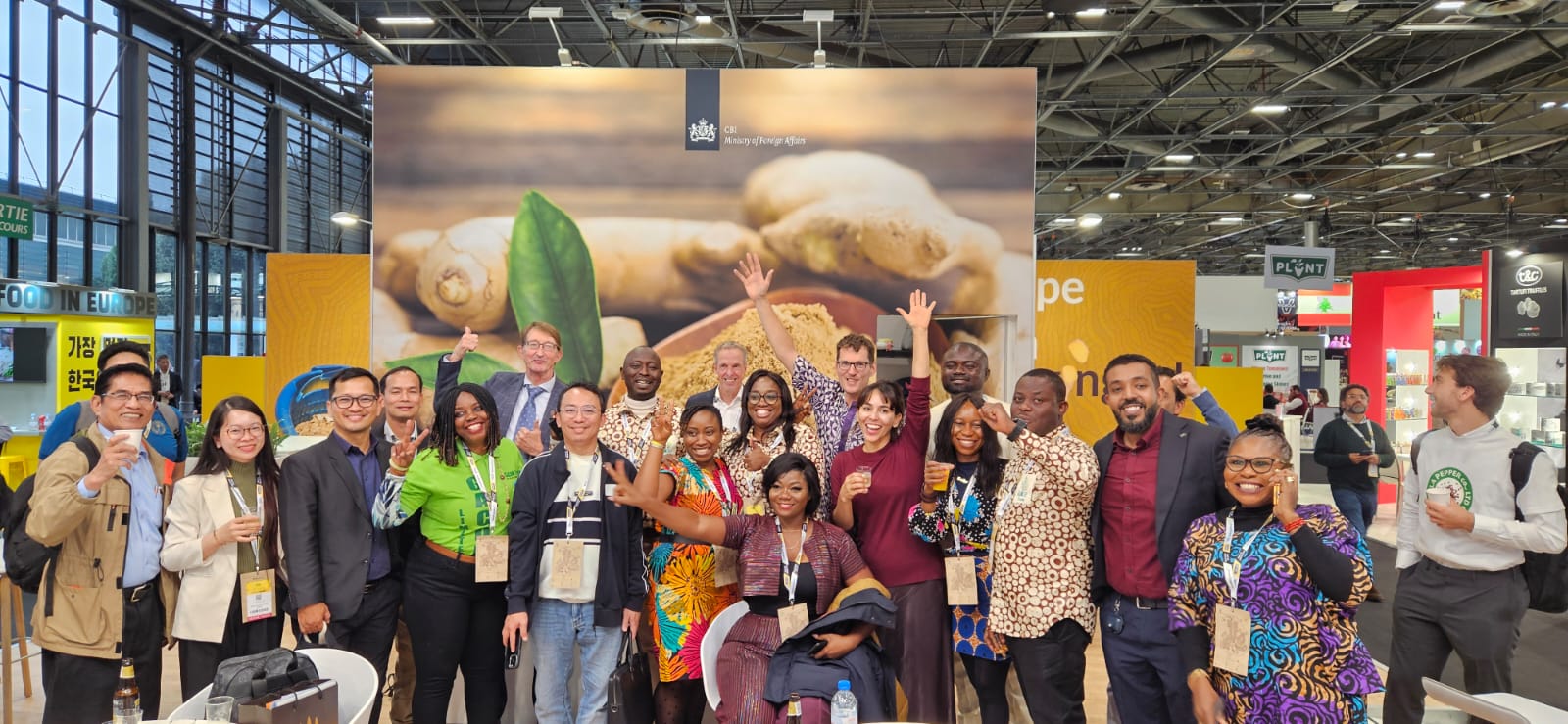
We sat down with Hugo Lamers, with whom we’ve been working on the ginger sector in Nigeria since 2021 in a project in collaboration with CBI titled “Support the transition to a high-quality and sustainable ginger sector in Nigeria,” and heard about his perspective on this issue, his hopes, and challenges:
PF: Please describe a typical ginger farm in Nigeria.
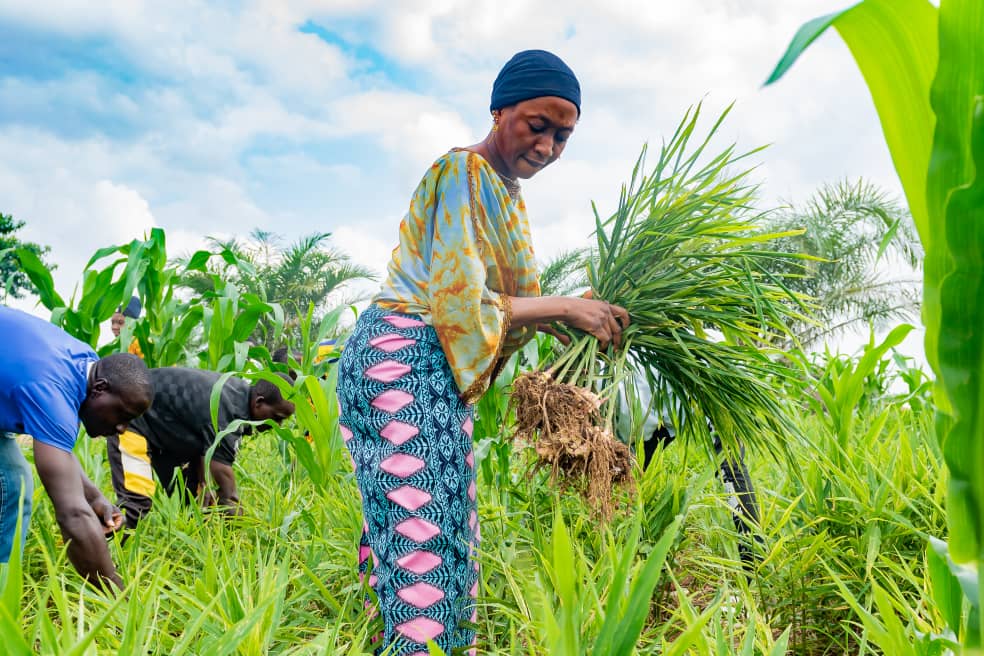
HL: Ginger is a tropical and sub-tropical crop; it needs sufficient moisture and heat but cannot stand very high or low temperatures. It grows best in forest fringes, in open spaces in forests, and half shade is best for ginger. In Nigeria, ginger grows in the fields, mostly in small plots (less than 1 hectare) but also by larger farmers with plots beyond 2 hectares.
PF: What has changed in ginger production in the past years?
HL: In Southern Kaduna, the number of trees and the soil quality have decreased. Deforestation has been happening in the area slowly but steadily, and farmers find it more difficult to find good mulching materials. Besides, too intensive cultivation and the use of chemical fertilizer instead of organic fertilizers has lowered nutritional value of the soil. There are also social conditions: farmers prefer to grow ginger close to their village and around the main roads; further into the forest is not safe because of kidnappers and thieves that usually hide there. Thus, crop rotation is a challenge, and the proximity of the farms is a risk since diseases spread more easily. Ginger takes a lot of nutrients from the soil, so it is necessary to let the soil “rest” for at least 3-4 years before planting ginger again. This hasn’t been happening.
PF: What amount of ginger production in this region is organic?
HL: Organic certified ginger production is very low; I would say less than 5%. Part of the farmers practically grow organic ginger but with low yields, as they just can’t afford chemical fertilizers or pesticides. However, a substantial part of the farmers in Southern Kaduna do use fertilisers and chemicals and have been using these for a long time, degrading the soil.
PF: What happened that facilitated the disease spread so fast?
HL: The weather, foremost, as humidity and rain facilitate the disease to spread. However, the disease was already there, and why was this? Because crop rotation is not done properly, they grow the ginger too often in the same soil, and the disease stays in the soil. Also, it spread through their seedlings as most farmers use and keep their own seedlings for the next season without proper treatment. It can be in the soil and the water that goes from one field to another. It spread like wildfire throughout the whole area.
PF: What can be done to prevent this situation from getting worse?
HL: I believe this is the perfect moment to ask what are the proper practices that we can implement to prevent this situation from getting worse, or better, to build back the sector better?
We don’t want to abandon the sector. We should explore new regions to grow ginger: spread out, this way the chances of getting hit by disease are reduced.
We should also work on farm practices and strategies that can prevent this disease. They exist but are not very popular yet in the region, such as organic and regenerative farm methods or growing ginger in an agro-forestry system. If those could be adopted, we might come out even stronger.
Most of the time, exporters in Nigeria are not linked to producers; they buy through intermediaries. This means exporters have less control over the quality. People that export often don’t know what’s happening in the farmers’ field. A solution is that exporters should work directly with producers to improve practices. Exporters are the ones who should be involved in the training.
PF: Can you tell me a little bit about the demonstration plots you’ve been developing in partnership with COLEAD?
HL: The idea is to set up demonstration plots to experiment with practices so farmers can see, evaluate and choose which practices they want to implement. We aim to teach them how to use neem cake and bio preparations with positive fungus to combat this disease, how to apply crop rotation or treat seedlings before planting etc. However, none of these methods are very well integrated in the region. We also focus on doing field practices with organic and chemical fertilisers. The demo plots help to train the trainers, who are the field staff of exporters, who can then train their own farm groups.

0 Comments