

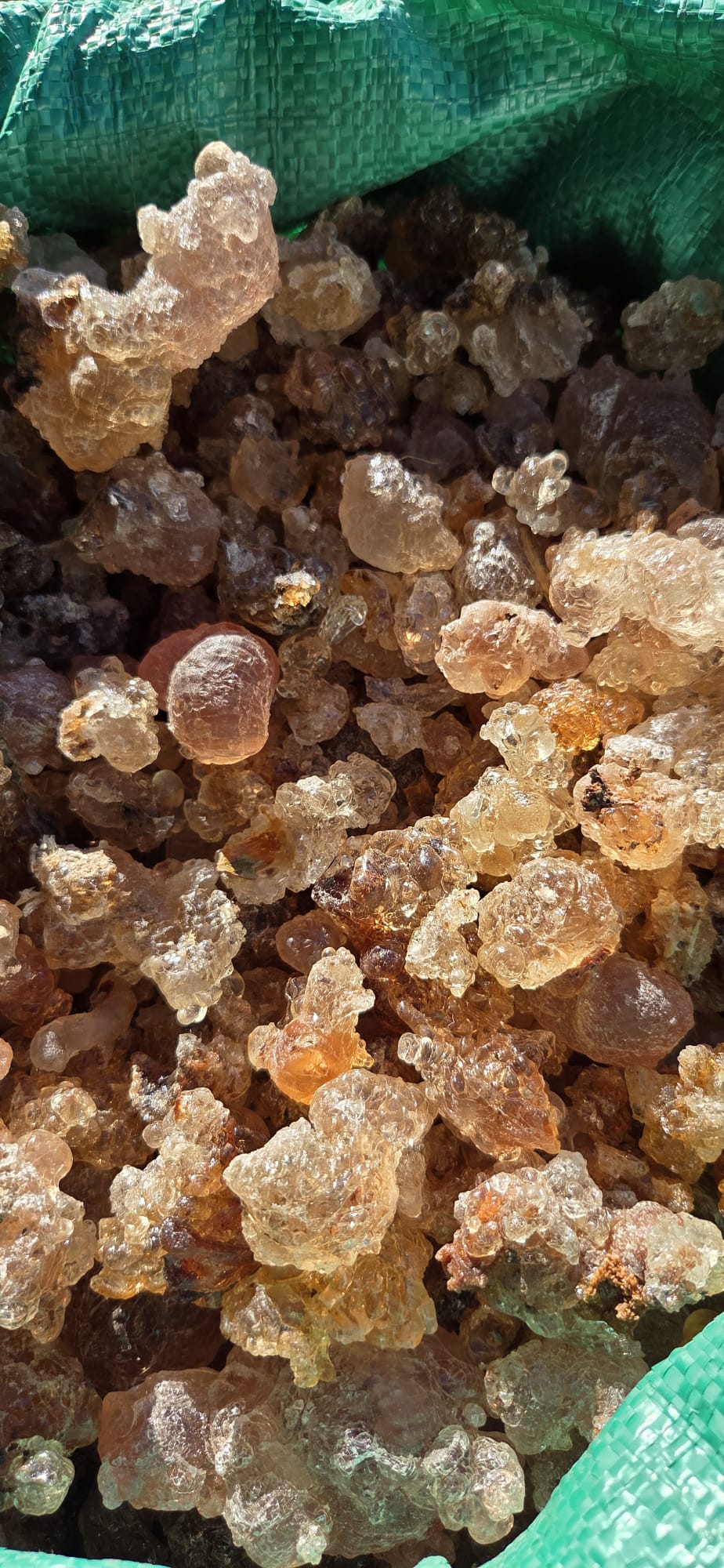
Frankincense and other gums and resins sit at the intersection of trade, biodiversity and livelihoods.
As European demand for natural ingredients continues to grow, so does interest in products like frankincense for use in fragrances, cosmetics, personal care and wellness. Recent market analysis by CBI | Transforming Trade Together points to Europe as a growing market for frankincense, with countries such as Germany and France among the most important destinations. Buyers are also placing increasing value on traceability, sustainability and stronger origin stories.
But demand is only one part of the picture.
What matters just as much is what happens at origin: how these ingredients are harvested, who is involved, how value is shared, and whether supply chains are being built in ways that protect both people and landscapes.
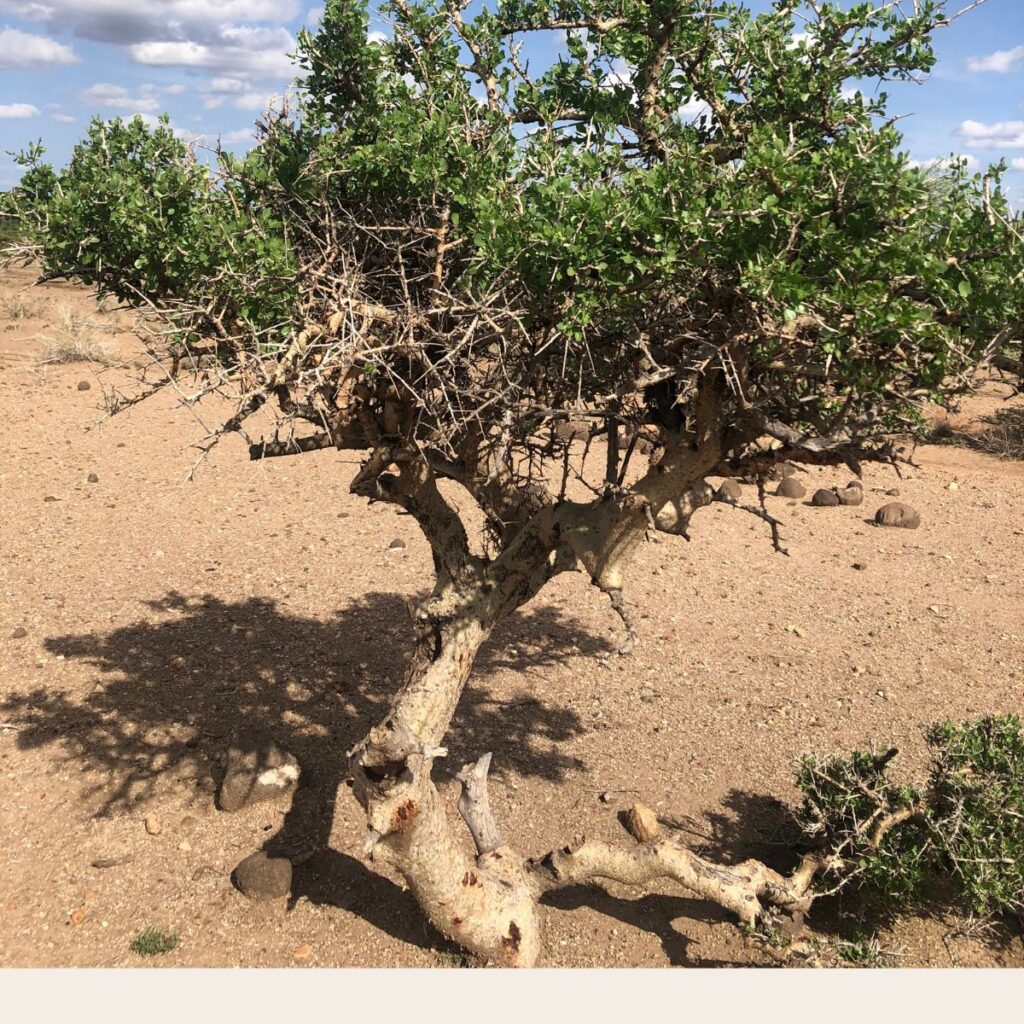
Frankincense tree (Boswellia papyrifera), growing in arid conditions. This species is a key source of natural frankincense resin, traditionally harvested for use in incense, perfumery, and natural ingredients.
Beyond the Product
Too often, the conversation around gums and resins focuses on market potential alone. Yet these value chains begin in places where livelihoods are closely tied to fragile ecosystems, and where the people doing the harvesting often remain the least visible part of the chain.
That is why building a stronger market for gums and resins cannot be reduced to exports alone. It also requires better systems on the ground: clearer sourcing structures, stronger traceability, improved harvesting and post-harvest practices, and more equitable relationships between collectors, suppliers and buyers.
For us, this is where the real work begins.
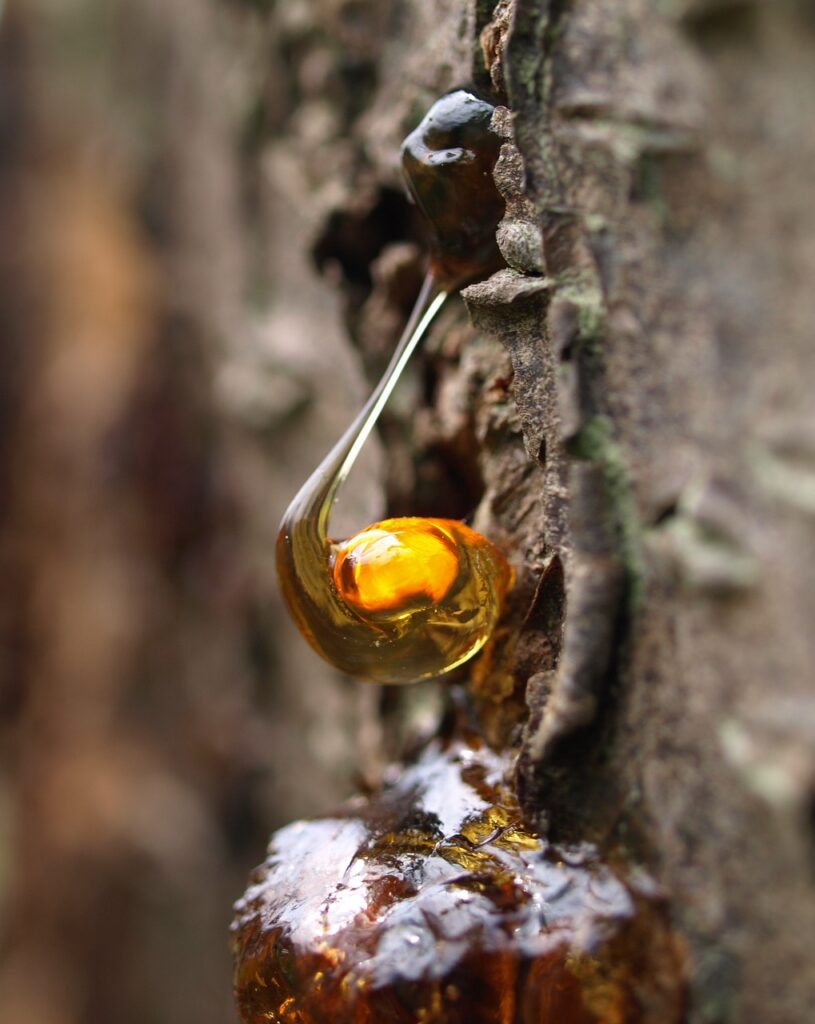
Fresh resin exuding from a Boswellia papyrifera tree. Once hardened, this natural secretion becomes frankincense, a resin valued for its use in incense, perfumery, and traditional medicine.
Our Work in Ethiopia
In Ethiopia, ProFound’s work focused on supporting more sustainable gums and resins supply chains, with greater traceability back to individual collectors and stronger connections to markets shaped by Organic, Fair Trade and Ethical BioTrade expectations.
- supply chain analysis
- training on harvest and post-harvest practices
- sampling and mapping
- work on collector-supplier agreements
- support in strengthening market linkages
The aim was not only to improve market access, but to help create supply chains that are better organised, more transparent and more sustainable over time.
This matters because traceability is not just about meeting buyer requirements. It is also about creating a clearer understanding of where products come from, who is involved in bringing them to market, and how more value and accountability can remain closer to origin.
Why this Matters
This is also why the work of FairWild Foundation in the frankincense sector is so relevant.
FairWild’s current work in Somalia and Kenya highlights a challenge the industry can no longer afford to ignore: rising demand for frankincense and other wild-harvested ingredients is putting increasing pressure on dryland ecosystems, while many harvesters still operate without formal training, contracts or rights.
Their response is to support sourcing models that are fairer, more traceable and more sustainable, while helping map value chains more clearly and promote better practices at origin.
This reflects a wider shift in the sector. Buyers are asking more questions. Markets are expecting more evidence. And supply chains are being asked to deliver not only quality, but also transparency, responsibility and a credible approach to sustainability.
What Kind of Market is Being Created?
For us, this is the key question.
The future of gums and resins should not be measured only by export potential. It should also be measured by whether more knowledge, value and accountability remain closer to the communities and landscapes where these ingredients originate.
That means asking:
Who harvests?
Who benefits?
What is being protected?
And what kind of market access is actually being built?
Because stronger trade is not only about increasing demand. It is about shaping supply chains that work better for producers, better for buyers, and better for the ecosystems that make these ingredients possible.
Want to Learn More?
Read more about our work on gums and resins in Ethiopia, or get in touch to explore how we can support more sustainable and traceable sourcing strategies.


0 Comments